
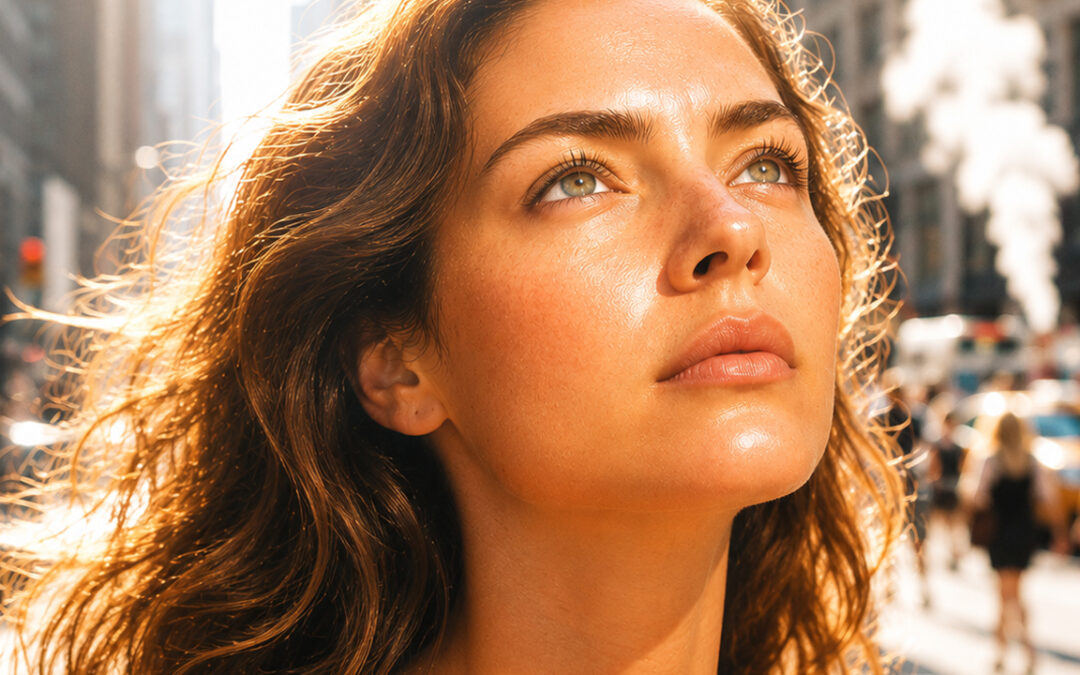
The skin is constantly interacting with the world around us. Every day, it is exposed to sunlight, pollution, smoke, airborne particles, changing weather conditions, and countless environmental stressors that influence how it looks, feels, and functions over time.
While many associate environmental exposure primarily with respiratory health, research suggests that the skin is also significantly affected by the environments in which we live. Air pollution, particulate matter, smoke, and other environmental stressors have been associated with oxidative stress, skin barrier disruption, increased sensitivity, uneven skin tone, dehydration, and accelerated visible aging.
These effects rarely appear overnight. Instead, they often develop gradually through repeated exposure over months and years. As a result, environmental stress becomes an overlooked contributor to common concerns such as dullness, pigmentation, dryness, sensitivity, and the premature appearance of fine lines and wrinkles.
Understanding how environmental factors affect skin health is becoming increasingly important, particularly for individuals living in urban environments where exposure to air pollution, smoke, ultraviolet (UV) radiation, and other environmental stressors is higher. Research continues to explore how these exposures influence oxidative stress, skin barrier function, pigmentation, sensitivity, hydration, and visible signs of aging. Fortunately, healthy lifestyle habits, antioxidant-rich nutrition, sun protection, barrier-supportive skincare, and thoughtfully formulated botanical products help support healthier, more resilient skin.
In This Article, You’ll Learn
- How pollution, smoke, UV radiation, and indoor environmental factors influence skin health
- Why environmental exposure is increasingly linked to oxidative stress, skin barrier disruption, sensitivity, pigmentation, and visible aging
- How indoor air quality affects skin health as much as outdoor environmental exposure
- The relationship between environmental stress, free radicals, and skin resilience
- Practical ways to support healthier-looking skin through lifestyle habits, environmental awareness, nutrition, and skincare
- How antioxidant-rich botanical ingredients support the skin’s natural defenses against environmental stress
Key Takeaways
- The skin is continuously exposed to environmental stressors, including pollution, smoke, UV radiation, indoor toxins, and other environmental factors that influence skin health over time.
- Environmental exposure has been associated with oxidative stress, inflammation, skin barrier disruption, dehydration, pigmentation, sensitivity, and accelerated visible aging.
- Many common skin concerns, including dullness, uneven skin tone, dryness, and premature signs of aging, are influenced not only by age and genetics, but also by the environment in which we live.
- Both outdoor and indoor environments contribute to cumulative environmental exposure, making environmental awareness an increasingly important part of supporting long-term skin health.
- Healthy skin depends on more than skincare products alone. Lifestyle habits, nutrition, environmental awareness, and supportive skincare practices all play important roles in maintaining skin resilience.
- Supporting the skin barrier and minimizing unnecessary irritation strengthen the skin’s ability to cope with environmental stress.
- Antioxidant-rich nutrition and thoughtfully formulated botanical skincare support healthier-looking skin exposed to environmental challenges.
- Thoughtfully formulated botanical skincare, healthy lifestyle practices, and environmental awareness contribute to healthier looking and more resilient skin.
How Environmental Stress Becomes Visible on the Skin
Environmental stress rarely appears all at once. More often, its effects develop gradually, accumulating over time before becoming visible on the skin.
Research suggests that chronic exposure to environmental stressors such as pollution, smoke, ultraviolet (UV) radiation, and airborne particles contribute to a variety of common skin concerns. While the impact varies from person to person, environmental exposure has been associated with oxidative stress, inflammation, barrier disruption, dehydration, increased sensitivity, uneven skin tone, pigmentation, and accelerated visible aging.
One of the earliest signs is dullness. Skin exposed to ongoing environmental stress appears tired, lackluster, or less vibrant than healthy, well-supported skin. Over time, environmental exposure also contributes to dehydration and reduced skin comfort, leaving the skin feeling less balanced and more vulnerable to irritation.
Pigmentation and uneven skin tone have become some of the most widely studied skin concerns associated with environmental exposure. Research suggests that pollution and other environmental stressors contribute to the development of dark spots and uneven pigmentation, particularly when combined with UV radiation. As a result, environmental exposure is increasingly recognized as a potential contributor to a less even and more aged-looking complexion.
Environmental stress may also influence the skin’s natural resilience. Some individuals experience increased redness, irritation, or sensitivity when the skin is repeatedly exposed to external stressors. When combined with other challenges such as excessive exfoliation, harsh skincare products, or a compromised skin barrier, environmental exposure further increases the skin’s susceptibility to discomfort and reactivity.
Perhaps most notably, environmental exposure has been associated with accelerated visible aging. Scientists believe that oxidative stress and chronic inflammation contributes to the gradual breakdown of collagen and elastin, two important structural components that maintain the skin’s firmness, elasticity, and youthful appearance. Over time, this contributes to the appearance of fine lines, wrinkles, sagging, and loss of skin vitality.
While aging is a natural and inevitable process, growing evidence suggests that the environment in which we live influences how skin ages and how resilient it remains over time. This evolving understanding is reshaping the way many experts think about skin health. Increasingly, healthy-looking skin is viewed not simply as a reflection of age or genetics, but as the result of a dynamic relationship between biology, lifestyle, skincare practices, and the environment itself.
Environmental Stress, Oxidative Stress, and Premature Aging
One of the primary ways environmental stress is believed to affect the skin is through a process known as oxidative stress.
Oxidative stress occurs when unstable molecules called free radicals accumulate faster than the body can effectively neutralize them. While free radicals are produced naturally as part of normal metabolism, environmental factors such as pollution, smoke, UV radiation, and other environmental stressors may increase their formation.
When free radicals accumulate beyond the skin’s natural protective capacity, they contribute to cellular stress and inflammation. Over time, this accumulation of free radicals influences the skin’s ability to maintain optimal function, resilience, and a healthy appearance.
Scientists believe oxidative stress plays a role in the gradual breakdown of collagen and elastin, two proteins that provide the skin with firmness, elasticity, and structural support. As these changes accumulate, visible signs of aging such as fine lines, wrinkles, loss of elasticity, uneven skin tone, and diminished radiance become more apparent.
Oxidative stress has also been associated with skin barrier disruption and increased inflammation. Because the skin barrier plays an essential role in maintaining hydration and protecting the skin from external aggressors, prolonged oxidative stress contributes to dryness, sensitivity, irritation, and reduced skin resilience.
As discussed in our article, The Skin Barrier: The Foundation of Healthy, Resilient Skin, the skin barrier plays a critical role in maintaining hydration, comfort, and resilience while protecting the skin from environmental stressors. When the barrier becomes compromised, the skin becomes more vulnerable to moisture loss, irritation, sensitivity, and other visible signs of imbalance.
For this reason, many experts now view environmental protection as an important component of long-term skin health. Increasingly, skincare is not focused solely on correcting visible signs of damage after they appear, but also on helping support the skin’s natural ability to defend itself against ongoing environmental challenges.
This growing understanding has contributed to increased interest in antioxidant-rich nutrition and skincare. While no product can eliminate environmental exposure entirely, supporting the skin with antioxidants and barrier-conscious skincare practices promote healthier-looking, more resilient skin over time.
Environmental Stress, Skin Sensitivity, and Barrier Function
Environmental stress does not always appear as visible signs of aging. In some individuals, environmental exposure may present instead as increased skin sensitivity, discomfort, dryness, redness, or irritation.
One reason is the close relationship between environmental exposure and skin barrier function. The skin barrier serves as the body’s protective shield, helping to retain moisture while limiting the penetration of external irritants. When functioning optimally, it plays an important role in maintaining skin comfort, balance, and resilience.
Repeated exposure to environmental stressors such as pollution, smoke, UV radiation, harsh weather conditions, and airborne particles places additional demands on the skin barrier. Over time, these exposures contribute to barrier disruption, making it more difficult for the skin to maintain its natural protective function.
As the barrier becomes less efficient, the skin becomes more vulnerable to dryness, irritation, and increased reactivity. Some individuals may notice that their skin becomes less tolerant of environmental conditions or skincare products that were previously well tolerated.
This growing understanding has shifted attention toward supporting the skin’s natural protective systems rather than focusing solely on correcting visible concerns after they appear. Increasingly, skin resilience is being recognized as an important component of long-term skin health.
For a deeper exploration of why some individuals experience greater skin reactivity than others, see our article, Understanding Sensitive Skin: What Causes It and How to Calm, Strengthen, and Restore the Skin Barrier.
While sensitive skin can have multiple contributing factors, environmental exposure is increasingly recognized as one of the many influences that affect skin comfort and tolerance over time.
A healthy skin barrier cannot eliminate environmental exposure, but it does help the skin respond more effectively to daily challenges while maintaining greater comfort, balance, and resilience over time.
Why Indoor Air Quality Matters
When people think about environmental stress, they often picture traffic, industrial emissions, or outdoor air pollution. However, the skin’s exposure to environmental stressors is not limited to the time spent outdoors.
Many people spend the majority of their day inside homes, offices, schools, and other indoor environments. As a result, indoor air quality has become an increasingly important area of interest in discussions surrounding environmental wellness.
Indoor environments may contain a variety of airborne substances, including smoke, volatile organic compounds (VOCs), synthetic fragrances, cleaning chemicals, cooking emissions, dust, and other microscopic particles. While exposure levels vary considerably, these substances may contribute to the overall environmental burden experienced by the skin.
The skin does not distinguish between indoor and outdoor sources of environmental stress. Therefore, repeated exposure to airborne irritants from multiple environments contributes to oxidative stress, barrier disruption, dehydration, irritation, and increased skin sensitivity.
This growing awareness highlights the importance of taking a broader view of environmental wellness. Supporting the skin is not only about protection outdoors, but also about paying attention to the environments in which we live and work every day.
Simple practices such as improving ventilation, reducing exposure to smoke, minimizing unnecessary synthetic fragrances, and maintaining good indoor air quality reduces environmental stress and supports overall skin wellness.
As our understanding of environmental exposure continues to evolve, researchers are increasingly examining how both indoor and outdoor environments influence the appearance, comfort, and function of the skin over time.
Environmental exposures do not act in isolation. Nutrition, sleep quality, stress levels, exercise, and other lifestyle habits also influence how well the skin responds to environmental challenges. For a broader discussion of these interconnected influences, see Nutrition and Skin Health: How Diet, Sleep, Exercise, and Stress Influence Healthy Skin.
The Botanical Approach to Environmental Skin Wellness
Environmental exposure is an unavoidable part of modern life. Since it is not possible to eliminate every source of environmental stress, skincare can play an important role in supporting the skin’s natural protective systems.
This growing understanding has contributed to increased interest in botanical ingredients rich in antioxidants, polyphenols, flavonoids, carotenoids, and other naturally occurring compounds that support skin health. Many plant extracts have been studied for their ability to defend against oxidative stress while supporting the skin’s natural barrier function and overall resilience.
Botanical ingredients also provide benefits beyond antioxidant support. Many plant extracts contain compounds that help soothe visible irritation, support hydration, and promote skin comfort for a healthy-looking complexion as the skin is exposed to daily environmental challenges.
Increasingly, skincare is moving beyond the idea of simply correcting visible concerns after they appear. A more comprehensive approach focuses on helping the skin maintain balance, adaptability, and resilience in the face of ongoing environmental exposure.
This philosophy aligns with a growing appreciation for botanical skincare that works in harmony with the skin’s natural biology. Rather than relying solely on increasingly aggressive interventions, the goal is to support the skin’s natural ability to defend, adapt, and maintain healthy function over time.
As research into environmental skin wellness continues to evolve, antioxidant-rich botanical ingredients are becoming an increasingly important part of skincare strategies designed to support healthier-looking, more resilient skin.
Conclusion
The environment in which we live influences far more than the air we breathe. Every day, the skin encounters a wide range of external exposures that affect its appearance, comfort, resilience, and overall health over time. While many of these influences are not immediately visible, their effects can accumulate gradually and contribute to some of the most common skin concerns associated with modern life.
As research continues to explore the relationship between environmental exposure and skin health, a broader understanding of skin wellness is beginning to emerge. Healthy-looking skin is shaped not only by age, genetics, or skincare products, but also by the conditions to which the skin is exposed each day and its ability to adapt to those challenges.
Perhaps the most important takeaway is that environmental protection is not limited to avoiding harmful exposures whenever possible. It also involves supporting the skin’s natural defenses through healthy lifestyle habits, proper nutrition, sun protection, barrier-conscious skincare, and thoughtful daily care. By taking this more comprehensive approach, we can help promote healthier-looking, more resilient skin in an increasingly challenging environment.
What Environmental Skin Wellness Means at Blue Beautifly
At Blue Beautifly, we recognize that environmental exposure is an unavoidable part of daily life. While no skincare product can eliminate environmental stress entirely, thoughtfully formulated skincare supports the skin’s natural ability to defend, adapt, and maintain resilience in the face of daily challenges.
This understanding influences how we formulate our products. Rather than focusing solely on correcting visible concerns after they appear, we prioritize ingredients that support skin health, barrier function, hydration, comfort, and overall skin resilience.
Blue Beautifly formulations incorporate antioxidant-rich botanical, fruit, herbal, flower, and Mediterranean pine bark extracts selected for their ability to defend the skin against environmental stressors. These ingredients are naturally rich in polyphenols, flavonoids, carotenoids, and other plant compounds that have been studied for their role in defending against oxidative stress and supporting healthy-looking skin.
Our formulations draw from both advances in skin biology and centuries of botanical and herbal wisdom. By combining carefully selected plant ingredients with thoughtful formulation design, we create skincare that nourishes the skin, supports barrier function, promotes resilience, and defends against the environmental stressors that the skin encounters every day.
Because environmental stress may also affect skin comfort and barrier function, we place particular emphasis on ingredients that support hydration, replenish the skin, and promote resilience. Our goal is not only to help protect the skin from daily environmental challenges, but also to help maintain healthy-looking skin that feels balanced, comfortable, and supported over time.
This philosophy extends throughout our product collection. Each formulation is designed to support the skin’s natural protective systems while helping maintain balance, hydration, comfort, and resilience in the face of ongoing environmental challenges.
All Blue Beautifly products are dermatologically tested for sensitive skin and are formulated with a commitment to supporting the skin rather than overwhelming it. We believe healthy-looking skin is best supported through thoughtfully crafted, botanically rich formulations that respect the skin’s natural protective systems while helping it adapt to the environmental challenges of everyday life.
Frequently Asked Questions
How does environmental exposure affect the skin?
Environmental exposure affects the skin through pollution, smoke, UV radiation, airborne particles, indoor pollutants, and other environmental stressors. Over time, these exposures contribute to oxidative stress, dehydration, barrier disruption, increased sensitivity, uneven skin tone, pigmentation, and accelerated visible aging.
Can pollution contribute to premature skin aging?
Research suggests that pollution and other environmental stressors contribute to oxidative stress and inflammation, which affect collagen, elastin, and overall skin resilience. Over time, this contribute to fine lines, wrinkles, dullness, uneven skin tone, and loss of firmness.
Can environmental stress affect skin pigmentation?
Yes. Research suggests that environmental stressors, particularly when combined with UV exposure, contribute to uneven skin tone and the appearance of dark spots. Increasingly, environmental exposure is being recognized as one of several factors that influence pigmentation over time.
Why does environmental stress make skin feel more sensitive?
Environmental stress places additional demands on the skin barrier. When barrier function becomes compromised, the skin becomes more vulnerable to moisture loss, dryness, irritation, redness, and increased reactivity.
Does indoor air quality matter for skin health?
Yes. Indoor environments may contain smoke, VOCs, synthetic fragrances, cleaning chemicals, cooking emissions, dust, and other airborne particles. Because much of our time is spent indoors, indoor air quality is a significant factor in overall environmental exposure.
How can I support skin exposed to environmental stress?
Supporting the skin begins with maintaining a healthy skin barrier, wearing daily sun protection, staying hydrated, following a nutrient-rich diet, avoiding unnecessary irritation, and using gentle skincare formulated to support skin comfort, resilience, and overall skin wellness.
Why are antioxidants important for environmentally stressed skin?
Antioxidants neutralize free radicals generated by environmental stressors such as pollution, smoke, and UV exposure. Antioxidant-rich foods and skincare support healthier-looking skin, promote skin resilience, and defend against oxidative stress.
Are botanical ingredients beneficial for environmentally stressed skin?
Many botanical ingredients naturally contain antioxidants, polyphenols, flavonoids, carotenoids, and other beneficial compounds. Thoughtfully formulated botanical skincare supports hydration, barrier function, skin comfort, and overall skin wellness in the face of daily environmental challenges.
Support Your Skin in an Increasingly Challenging Environment
Environmental exposure is an unavoidable part of modern life. From air pollution and UV radiation to smoke and indoor pollutants, the skin faces daily challenges that influence hydration, barrier function, sensitivity, pigmentation, and visible aging. While these exposures cannot always be avoided, supporting the skin with healthy lifestyle habits, antioxidant-rich nutrition, daily sun protection, and thoughtful skincare does promote healthier-looking, more resilient skin over time.
At Blue Beautifly, we formulate with this philosophy in mind. Our antioxidant-rich botanical formulations combine advanced scientific research with the wisdom of ancient herbal traditions to protect, replenish, and strengthen environmentally stressed skin while supporting hydration, comfort, and overall skin wellness.
Explore our collection of thoughtfully formulated skincare and tailored skincare regimen for each skin type designed to help your skin thrive in today’s environment.
Related Articles
- The Skin Barrier: The Foundation of Healthy, Resilient Skin
- Understanding Sensitive Skin: What Causes It and How to Calm, Strengthen, and Restore the Skin Barrier
- The Pursuit of Healthy Skin: Why Balance Matters More Than Appearance of Perfection
- Nutrition and Skin Health: How Diet, Sleep, Exercise, and Stress Influence Healthy Skin
References
- UCLA Health. Simple Steps to Protect Your Skin from Everyday Pollution.
- Kim KE, Cho D, Park HJ. Air Pollution and Skin Diseases: Adverse Effects of Airborne Particulate Matter on Various Skin Diseases. Life Sciences. 2016;152:126–134.
- Vierkötter A, Krutmann J. Environmental Influences on Skin Aging and Ethnic-Specific Manifestations. Frontiers in Environmental Science. 2014;2:11. doi:10.3389/fenvs.2014.00011.